Low-Code Is Becoming Code Again

Table of Contents
No-code / Low-code was supposed to save us from code.
That promise was always a bit theatrical. What low-code really did was lower the floor: more people could build useful software without opening a full development stack and summoning architecture review as a form of recreational punishment.
That worked until the apps became important.
Now AI is changing the bargain again. The result is not the end of low-code. It is low-code becoming code again — and the model replacing it has a name: vibe coding.
The arc looks like this:
Visual assembly] --> B[Low-code
Guided customization] B --> C[AI-assisted low-code
Prompt + project files] C --> D[Governed software delivery
Git, code agents, pipelines]
The old promise had a ceiling #
No-code and low-code worked best for a narrow class of problem:
- internal tools
- straightforward workflows
- lightweight automation
- apps that fit neatly inside the platform’s happy path
The appeal was obvious: faster delivery, less ceremony, fewer developers rebuilding the same approval workflow for the 400th time.
Then the apps got real. Integrations appeared. Security mattered. Environments multiplied. Someone asked about deployment, audit, or scale, and the cheerful drag-and-drop story started sweating through its shirt.
Low-code was never fake. It just had a ceiling. Complexity did not disappear. It waited off-screen until somebody tried to run the thing properly.
Microsoft’s tooling is telling the truth #
The clearest signal is not the marketing. It is the tooling Microsoft is shipping.
Power Pages now supports CLI and Git workflows.
Copilot Studio has moved into VS Code.
Power Apps Code Apps turns apps into code projects.
Power Apps Vibe starts from prompts and generates from intent.
Put those together and the pattern is obvious: the visual layer still exists, but the serious work is moving toward files, repos, local tooling, and AI-assisted development.
That matters because once these things become code projects, they can be used with Claude Code, Codex, and GitHub Copilot instead of being trapped inside a browser designer.
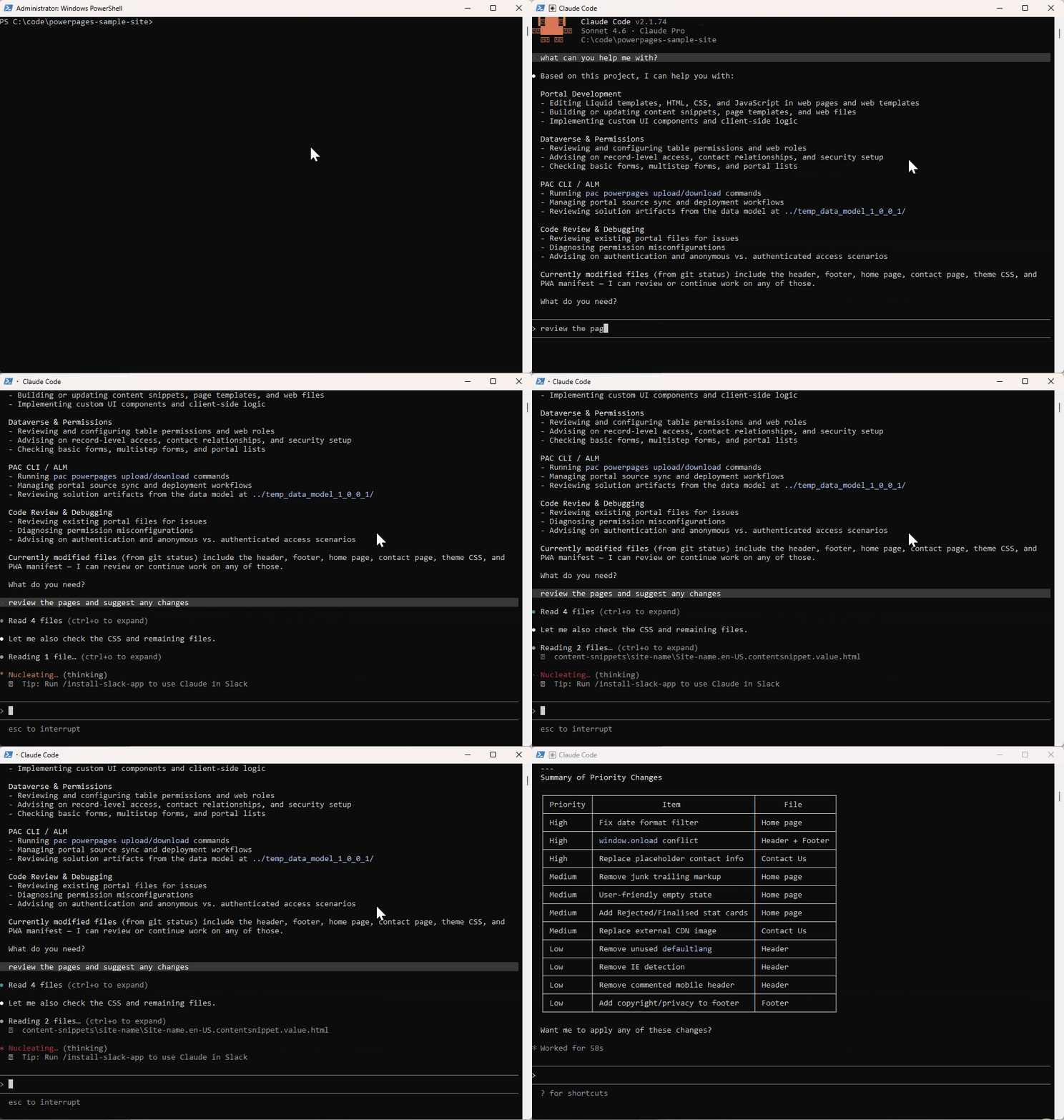
That is not low-code failing. That is low-code maturing into the same operational reality as the rest of software.
AI did not remove engineering #
AI makes creation cheaper. It does not remove engineering. If anything, it raises the premium on judgment.
When a platform can generate an app, flow, or agent from a prompt, someone still has to answer the questions that matter:
- Is the data model any good?
- Are the security boundaries sensible?
- Will this survive multiple environments and deployment cycles?
- Does the generated logic solve the actual problem or just produce a convincing demo?
The old fantasy was that no-code meant engineering disappeared. The real version is stranger and more useful: you describe intent, AI works against project files underneath, and engineering moves from manual construction to review, structure, and governance.
That is closer to “true no-code” than the original sales pitch ever was. It just is not the kind people expected.
The citizen developer did not disappear #
The old model rewarded people who could assemble solutions inside a guided UI. The new model rewards people who can direct AI, inspect output, and tell the difference between “works in a demo” and “will not become a governance incident by Q3.”
The manual effort is shrinking. The judgment requirement is not.
So what is Power Platform becoming? #
It is becoming less of a place where software is handcrafted visually and more of a governed runtime for software assembled through prompts, code projects, configuration, and platform services.
That is a more honest role. Power Platform is good at governance, environments, connectors, policy, and control. None of that is glamorous, which is exactly why it matters.
The visual experience still matters. The productivity story still matters. But the durable value is shifting toward this:
- let AI accelerate creation
- let code projects expose the work to better tools
- let humans provide judgment
- let the platform enforce guardrails
That is not the death of low-code. It is low-code growing up.
Where this lands #
Low-code is becoming code again because success raised the stakes.
Once these platforms started carrying real processes, real data, and real risk, they inherited the same concerns as every other software stack. AI accelerates creation, but it also removes the comforting illusion that visual tooling alone is enough.
The future is not no-code versus pro-code. That was always a slightly silly binary.
The future is faster generation, real project artifacts, stricter judgment, and governance that can survive contact with production.
The winners will not be the people who prompt the fastest. They will be the teams who can absorb that speed without turning their platform into a compliance-themed escape room.